


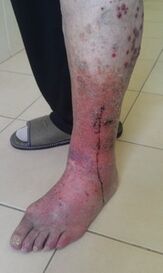
Varicose veins of the lower extremities (from Latin varix - “nodule”) are one of the most common vascular diseases of the lower extremities;According to various sources, it affects 20 to 40% of the adult population in developed countries.One of the main symptoms of the disease is the appearance of varicose veins, the formation of varicose veins and thinning of the venous wall, which leads to the appearance of valvular insufficiency of the veins and the development of symptoms of chronic venous insufficiency (CVI).The manifestation of CVI, in turn, is accompanied by a whole complex of symptoms, such as heaviness in the legs, swelling, fatigue, burning, night cramps, impaired trophism of the skin and soft tissues (dermatocellulitis).All patients with varicose veins will sooner or later develop venous insufficiency.
Modern medicine has achieved amazing results in the treatment of varicose veins, with a good cosmetic effect of treatment, long-term results and a minimal frequency of disease relapses.
However, a part of the population is still afraid of surgical procedures and does not go to a specialist.Our article is dedicated to this part of the population.
To date, the most common folk methods for treating varicose veins of the lower extremities are hirudotherapy (or treatment of varicose veins with leeches), herbal medicine (herbal medicine), contrasting foot baths, all kinds of ointments and rubs and, of course, diet therapy.Let's take a closer look at each of these methods.
Hirudotherapy
Treatment with leeches has long been used by doctors for a variety of diseases.Wall paintings discovered in the tombs of Egyptian pharaohs of the 18th Dynasty (1567–1308 BC) already contain evidence of treatment with leeches.They were widely used by doctors of ancient India, Greece and Rome, as evidenced by the works of the classics of ancient medicine - Claudius Galen (II century AD), Antillus (IV century), Avicenna (X-XI centuries) and many others.The healing properties of leeches are used for atherosclerosis, hypertension, coronary heart disease, varicose veins, inflammatory processes, joint diseases and many other pathological processes.
The healing properties of leeches are associated with their saliva, which enters the patient's bloodstream when bitten.Saliva contains about 30 enzymes and biologically active substances, including hirudin, which contributes to blood thinning, which in turn prevents the formation of blood clots and improves microcirculation at the bite site.
The most common place for placement of leeches for varicose veins are points located in a checkerboard pattern on both sides of the vein, receding from its edge by 1-3 cm.Many hirudotherapists also recommend placing leeches in the areas of the lower third of the leg where the skin has undergone the greatest trophic changes.The number of leeches used ranges from 6 to 10 and depends on the length of the dilated veins and the severity of local pathological changes.The course of treatment can last from 5 to 15 sessions.At the end of the procedure, an elastic bandage or compression stockings must be applied.
We are very skeptical about this type of treatment because the treatment is aimed only at preventing thrombosis, which often occurs with varicose veins, nothing more.Hirudotherapy simply smoothes the symptoms of the disease and does not mean the elimination of the main cause of the development of varicose veins - the elimination of the backflow (outflow) of blood through pathological veins - and therefore cannot be considered the main method of treating varicose veins.If there are pronounced trophic changes in the patient's skin, treatment with leeches can lead to serious complications, infection and necrotization of the skin.
Herbal medicine (herbal treatment) for varicose veins
Currently, herbal medicine as an independent method of treating varicose veins is not seriously considered by either herbalists or their opponents.Herbal medicines can only be used as a supplement to the main treatment or recommended as a preventative measure.When used correctly and regularly, certain combinations of herbs help to strengthen and increase the tone of the venous wall, prevent the formation of blood clots and have an anti-inflammatory effect.The best known and most proven herbal medicine, which has long been recognized in classical medicine, is horse chestnut.Various remedies for external or internal use are prepared from flowers, fruits or leaves, which strengthen the vein wall, relieve inflammation, thin the blood and reduce its clotting activity.The well-known venotonics also include verbena and red grape leaves.Horsetail, knotweed and lungwort contribute to strengthening the vein wall and normalizing metabolic processes in the connective tissue.Dandelion has approximately the same properties thanks to phospholipids that are found in all parts of the plant.
To improve blood circulation in the capillaries and prevent thrombosis, plants are used that contain various groups of substances - coumarins or salicylates, which reduce blood clotting: sweet clover, toadflax, meadowsweet, raspberry, peony and others.
Almost all of the listed herbs have an anti-inflammatory effect to some extent, but this property is most pronounced when using plants rich in tonins and gallic acid: bergenia root, sea buckthorn leaf or oak bark.
Therefore, herbal medicine can be used in the treatment of varicose veins, but only as an adjunct to surgical or other (more or less) radical treatments.
Ointments and gels for varicose veins
If we talk about varicose veins and treatment with ointment or gel, then this dosage form is often used in patients to thin the blood, have an anti-inflammatory and analgesic (pain-relieving) effect, and improve the reparative properties of the skin against the background of chronic venous insufficiency.What is important is the quick effect, safety and harmlessness of the application.Varicose veins treated with ointment may stop or slow down when these topical medications are used properly.The effectiveness of existing ointments depends on the components that form their basis.By using ointments, you cannot completely stop the progression of varicose veins, but you can alleviate the clinical symptoms of the disease.You should not consider any remedy and information about it as a direct guide to getting rid of varicose veins on your own;We strongly recommend that you consult a phlebologist for recommendations.
Diet therapy for varicose veins.
Diet therapy for varicose veins is a very important component for successful treatment of the disease.If you are overweight, you definitely need to lose weight.If your position or money allows, you can simply indulge in seafood such as squid, shrimp, seaweed, etc.In addition to protein, they contain many useful substances such as copper and bioflavonoids.Seafood promotes elastin production.This is a substance that strengthens the walls of blood vessels and prevents them from stretching.When the vessels are saturated with such a substance, they are more resistant to changes in blood pressure.The diet for varicose veins should also be rich in vitamins, so let's get to them.Rutin (or vitamin P) is found in chestnuts, hazelnuts and chokeberries.It has a very useful property: it reduces the permeability of the veins and thereby reduces swelling of the legs.Another vitamin that can help fight varicose veins is vitamin C. Its useful property is to prevent blood clots.Eat more foods with vitamin E, legumes, sprouted rye and wheat grains, egg yolks, liver, green onions, olive, corn and soybean oil.
With varicose veins, it is necessary to exclude marinades from the diet, as well as rich, spicy and smoked foods.Coffee, no more than one or two cups per day and with milk, best replaced with green tea.Drinks containing alcohol are contraindicated because alcohol retains water in the body, which increases the load on the venous system.You should avoid sweets and flour (all baked goods), be it a cake or a roll.
Foot baths, contrast showers, physiotherapy for varicose veins.
With varicose veins, as with any vascular disease, physical activity is of great therapeutic importance.Currently, specialists have developed a set of physical exercises for varicose veins, performed regularly, which can reduce the manifestations of venous insufficiency, slow down the development of varicose veins and significantly reduce the risk of dangerous complications of varicose veins.Regular physical activity strengthens the veins of the lower extremities.All of this can be completely attributed to foot baths and contrast showers.
However, in conclusion, we would like to remind once again that the treatment of varicose veins is a complex of therapeutic measures, the sequence and scope of which can only be determined by an experienced specialist.None of the methods listed above guarantee a 100% cure for this disease.Avoid complications from varicose veins.