


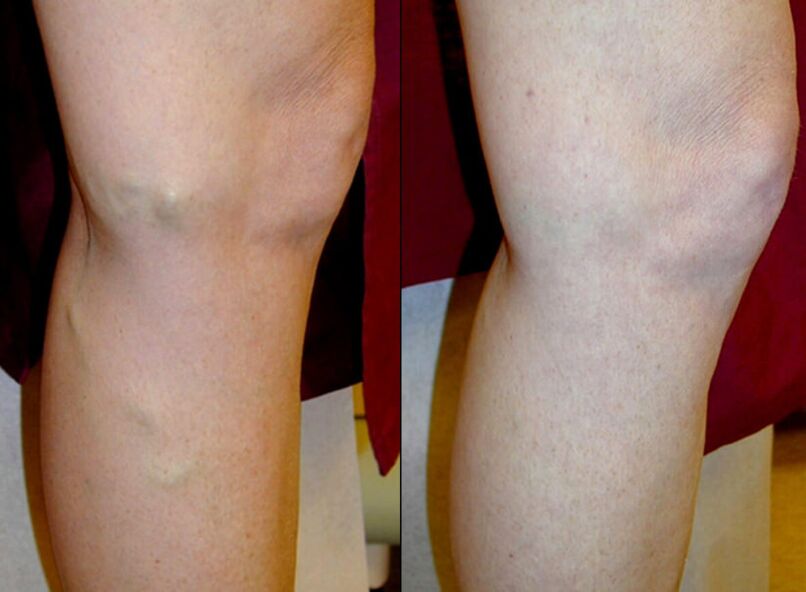
Varicose veins occur four times more often in women than in men.The variety of modern methods of treating varicose veins of the lower extremities allows you to choose the most effective strategy for solving the problem.
To normalize the condition of the veins, surgical, conservative and non-surgical options can be used.
Some patients prefer folk remedies, but their use in most cases does not bring the necessary benefit, which leads to further progression of the disease.
Laser treatment
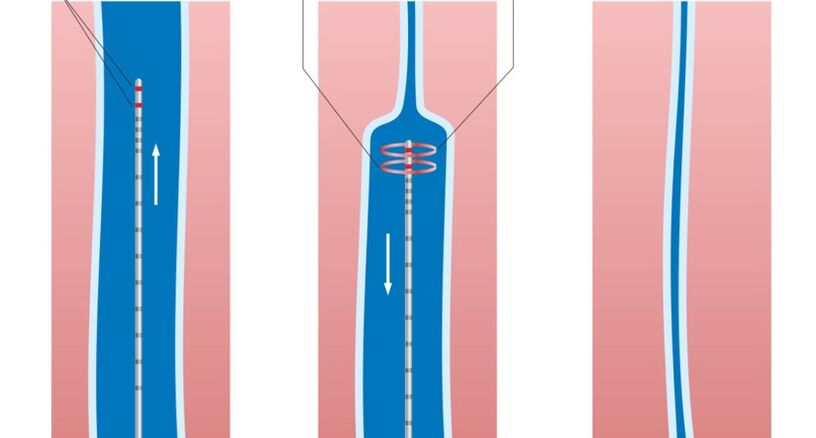
Laser coagulation is an effective measure to suppress the symptomatic manifestations of the disease.Under the influence of a laser beam, the problem vein is soldered and then switched off from the blood circulation.During the operation, a conductor is inserted into the diseased vessel, through which obliteration occurs.Over time, the operated vein is replaced by connective tissue.
EVLT offers an effective solution comparable to surgical vein removal used for the disease.
The operation is characterized by minimal trauma and lasts about 40 minutes.The patient does not lose his ability to work.He can return to work the next day.
The positive properties of laser coagulation are:
- no cuts on the skin;
- short operation time;
- accelerated rehabilitation period;
- the entire operation is carried out under constant monitoring by ultrasound machines, which reduces the possibility of medical errors;
- There are no bruises or large hematomas after laser surgery.
The negative aspects of laser treatment of veins include the high cost and the impossibility of performing surgical interventions on large vessels.With large veins, there is a possibility of complications: the vessel spontaneously detaches and returns to the general circulation.
Radiofrequency ablation
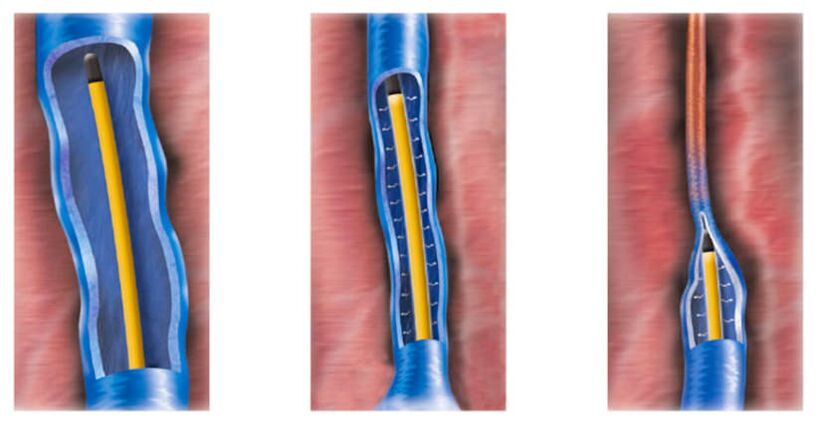
An effective technique helps get rid of venous diseases, but in most countries it is not available to the general population.During the operation, a high-frequency catheter is inserted into the damaged vessel, with the help of which blood circulation is blocked in it.
Ablation is just as effective as laser coagulation, but is used much less frequently.The positive properties of the surgical instrument are presented:
- the operation is performed on an outpatient basis;
- Local anesthesia is used;
- no loss of performance;
- no surgical incisions required;
- after the operation, the patient recovers within half an hour and can return to sports training after a week;
- in the postoperative period there are no painful sensations and hematomas;
- The process has a high level of security.
The negative aspects of surgical intervention are the high price and the possible likelihood of thermal burns.On the day of the operation, the patient is unable to drive a vehicle or do any work that requires increased attention.
Radiofrequency ablation is used less frequently than laser radiation.
Drug therapy
Conservative methods of solving the problem of damaged veins include the use of local medications: ointment, gel, cream, spray.The non-surgical direction uses:
- Corticosteroids— to reduce the migration of leukocytes, suppress inflammatory reactions, allergic manifestations and venous constriction;
- anti-inflammatory nonsteroidal drugs- relieve tissue swelling, are used to relieve pain, prevent platelet aggregation and relieve inflammation;
- Antithrombotic drugs— prevent the formation of blood clots, dissolve them in the veins;
- Phlebotonics – substances increase the tone of the venous walls and improve local blood circulation.
With a conservative approach, anti-inflammatory, venotonic and blood-thinning oral medications can be used.
The non-surgical technique is carried out in the initial stages of the development of varicose veins, takes a long time and requires systematic application.
Conservative methods are not able to eliminate formed spider veins or large nodules.They are necessary to stop further progression of the disease and maintain vascular tone.Correct application of the conservative approach prevents the development of complications – thrombosis, trophic ulcerations, thrombophlebitis.
Traditional medicine
Home recipes are non-surgical measures and do not represent an effective solution in the fight against venous diseases. Common teas, infusions, decoctions, compresses and lotions have not undergone serious clinical studies and cannot be included in the subgroup of effective methods of conservative treatment of the disease.
Adherents of traditional medicine run the risk of developing venous disease that requires surgical intervention.Primary symptoms of varicose veins require professional help, not “tried and tested” folk recipes.
Attention!
Excessive enthusiasm for folk recipes can lead to complications in the form of trophic ulcers.
Stockings and tights against varicose veins
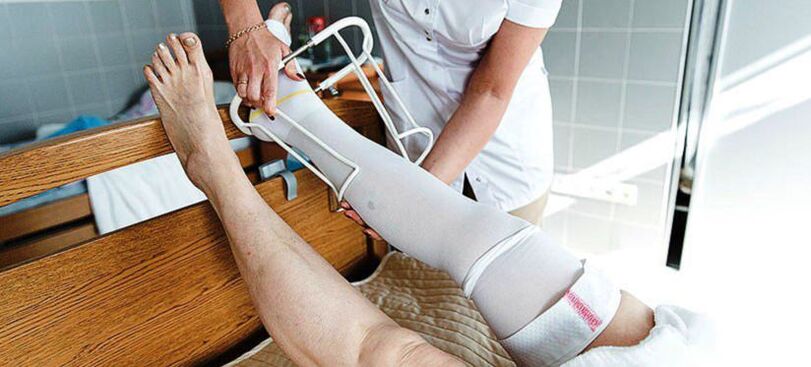
Compression stockings are used in all stages of the disease.The conservative direction helps to stabilize blood circulation in problem veins and improve overall health.
Compression stockings are selected by your doctor based on pressure and size.The technique is an effective measure for non-surgical restoration of blood flow in the veins, but does not guarantee a 100% cure for the disease.
Hydrotherapy
The positive quality of the water lies in the compression and relaxation effect of the veins.A non-surgical technique is used to improve vascular elasticity.
Effective conservative treatment is only used in the initial stages of the disease.
During the procedures, there is an alternating change in the temperature of the liquid - from low to high and vice versa.
Sclerotherapy
A non-surgical option for removing problematic veins.A special substance is injected into the vessel, sticks it together and is absorbed over time.Blood flow is redistributed along healthy blood vessels.
Up to four injections can be administered during one session, the number of manipulations depends on the severity of the disease.After the procedure, compression garments are applied to the lower extremity and the patient is required to walk to prevent the formation of blood clots in the veins.
Sclerotherapy shows sufficient effectiveness in accelerating blood circulation, suppressing swelling, pain, spasms and increased fatigue.Pigment spots may initially form along the vein, which disappear spontaneously over time.
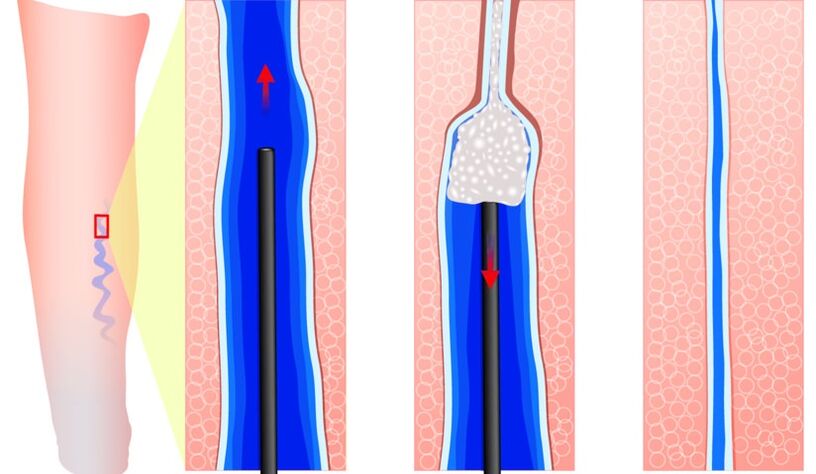
The non-surgical method is effective, provides long-lasting therapeutic and cosmetic results and, if the operation is successful, is lifelong.25% of patients with advanced forms of the disease do not receive complete relief from the disease.Your symptomatic signs of varicose veins will be significantly reduced.
The technique is not applicable under the following conditions:
- with spontaneous allergic reactions to sclerosing agents;
- when conducting conservative therapy - hormonal or anti-inflammatory drugs;
- overweight with varying degrees of obesity;
- if advanced forms of cellulite are detected in the area of damaged veins;
- for inflammatory and purulent diseases of the epidermis;
- during pregnancy;
- with thrombophlebitis.
The positive properties of the non-surgical method are presented:
- outpatient type, absence of a long postoperative period;
- effective result – no scars or scars remain on the skin;
- Absence of severe pain during surgery;
- Possibility of treating multiple veins at the same time.
The disadvantages are the lack of guarantees for obtaining lifelong results.To get it, you need to eliminate the original source of the disease.Not all patients like to wear compression stockings around the clock, which can only be removed as part of hygiene measures.
Surgical removal
Surgery is used when conservative, non-surgical therapy is ineffective.Phlebectomy is a radical solution to the problem of varicose veins, which involves their removal.
Like all surgical procedures, the operation requires a long recovery time.
Cryotherapy
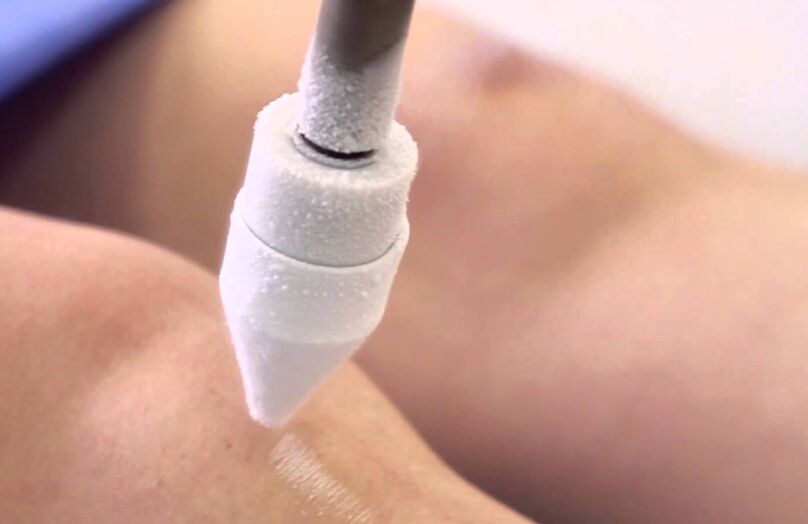
It is effective in treating varicose veins.The basis of the operation is the reaction of problem areas to cold temperatures, which is carried out using liquid nitrogen.The influence of third parties leads to the activation of protective mechanisms, accelerates the regeneration process of cellular structures, increases vascular tone and stabilizes the performance of the circulatory system.
During the procedure, there is initially a severe spasm of the veins, followed by immediate dilatation, which improves blood circulation.Depending on the condition of the body and the course of the disease, five sessions of cryotherapy may be required.
Ozone therapy for varicose veins
Exposure to oxygen allows you to quickly achieve the desired results.Non-surgical treatment is carried out using gaseous ozone supplied by special devices.
This method allows you to enrich cells with oxygen, accelerate recovery mechanisms and normalize blood flow through the veins.
Ozone therapy is carried out in several stages, the number of manipulations depends on the severity of the disease and the peculiarities of its course.The minimum therapy regimen requires 6 sessions, the maximum includes 12 procedures.
Pressotherapy for varicose veins
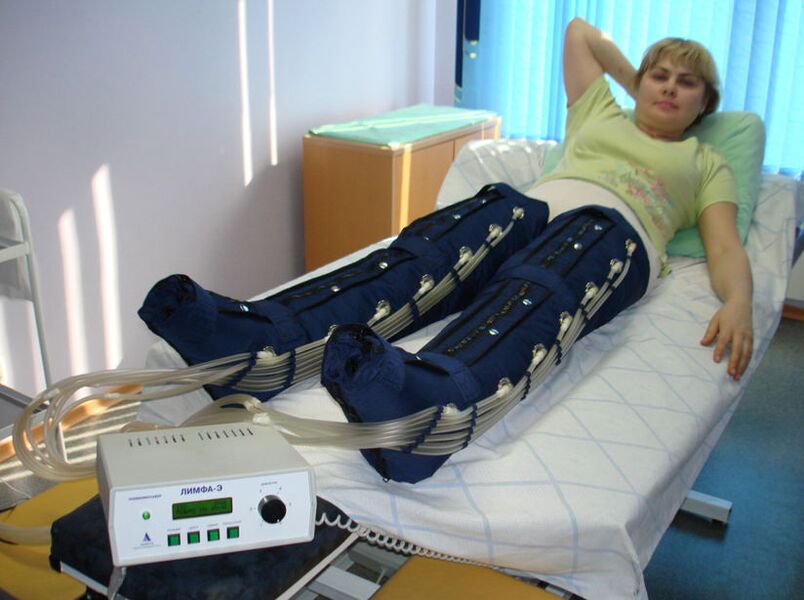
Non-surgical tactics include the principles of massage sessions and improving the drainage functions of tissue structures.During the manipulation, a special suit is used into which compressed air is pumped.The result of the action is the normal movement of lymphatic fluid and blood along the pipes, which allows normalization of local blood circulation.
The technique removes accumulated fluid that negatively affects the veins.After the first phase, patients note relief in the lower extremities: a decrease in pain, swelling and cramps.The course of therapy is determined strictly individually based on the indicators of the diagnostic examination.
Reviews
According to experts and patients, each technique has many positive and negative qualities.The only difference is that folk recipes are allowed.
Conclusion
Conservative, surgical and non-surgical measures can help you get rid of leg pain, night cramps and swelling.The final choice of appropriate therapy is left to the treating physician.Phlebologists recommend not to get carried away with traditional recipes, but to seek professional help when the first clinical symptoms appear.