


Varicose veins of the pelvis are a serious pathology that is the result of the reverse blood amount.The disease often develops due to ships.Pregnancy can be a provocative factor, since this state is associated with a significant change in the balance of the hormones in the body.This variety of varicose veins is often accompanied by severe pain in the lower abdomen.
Reasons
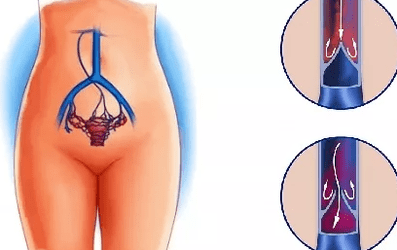
There are quite a few causes of varicose veins of the pelvis in women.Typically, the disease develops under the influence of a series of factors.
The key from you includes the following:
- Change the balance of the hormones in the body.This state can negatively influence the health of blood vessels.Progesterone has a pronounced relaxing effect on the smooth muscles, which causes a decrease in the venous sound.As a result, the vessels are more elastic, their valves are deformed and the walls are diluted.This provokes venous stagnation.This condition can also affect the pelvic area.
- Inflammation and non -plastic pathologies of reproductive organs.In this case, the therapy should aim to eliminate the main pathology.In the case of infections or oncological diseases, blood circulation is severely disturbed.These changes affect not only the pelvic area, but also the entire organism.This is due to entry into the systemic bloodstream of toxic substances, inflammatory mediators and other elements.
- Complex physical activity.This factor often causes damage to the musculoskeletal system and includes the development of vascular diseases.In such a situation, blood circulation is significantly disturbed, which leads to an inadequate diet of the veins.They stretch too much and lose their functions.
- Congenital anomalies of the structure of blood vessels and a genetic tendency towards varicose veins.Violation of the structure of flaps or walls leads to a quick deformation of blood vessels, which leads to problems with their functioning.
- A not enough active lifestyle.If there are no sufficient loads, the veins lose their tone and their elasticity.As a result, you will be bedding and cannot maintain the blood circulation normally.
- Pregnancy.In about 70% of cases, varicose veins are diagnosed in pregnant women.This is due to a combination of several factors at the same time.This includes a change in the balance of hormones, serious stress due to an increase in body weight, the transformation of the circulatory system due to the formation of the placenta.
The varicose veins of the pelvis develop under the influence of one or more factors at the same time.Anomal processes are usually located in the vaginal area, in the uterus.
The risk group includes people who tend to collect the pelvic organs.The disease often develops against the background of tumor formation, cysts or endometriosis.The risk of disease also increases in women with a high estrogen content in the blood.
classification
Two main forms of pathology are differentiated:
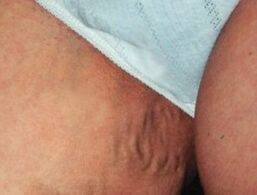
- The expansion of the vulva veins - in difficult situations, the interior of the thigh and the perineum zone has an effect;
- Venous abundance.
Typically, both varieties of the disease are present at the same time, but the symptoms of one of them manifest themselves.This state is similar to a vicious circle: the expansion of the vulva veins causes problems with the venous drain to the pool, and the dilation of the pelvic plexus provokes the expansion of vulva veins.
In addition, this disease often disappears independently after birth.
Only 2-10% of women remain their symptoms.
Such varieties of the disease are differentiated according to the degree of expansion:
- 1 degree- The size of the veins with a diameter of no more than 5 mm, they have a convincing train;
- 2 degrees-The diameter is 6-10 mm, the varicose veins are complete or only influence the plexus of the ovaries, myometers or parameters.
- 3 degrees- The size of the diameter of the vessels is more than 10 mm.
Sign
The symptoms of varicose veins of the pelvic veins are diverse and often resemble manifestations of lesions near organs nearby.The disease usually runs with the dominance of signs of a specific form.
Vulval varicose veins
The main symptoms of this form of the disease are the following:
- Venous expansion.The main manifestation of this form is a noticeable expansion of the veins in the zone of the vulva or the perineum.The patient herself can see her.This disease is accompanied by a feeling of itching, severe and shabby pain in this zone.The doctor can identify the edema of the labia, an increase in veins in this zone.The process of hemorrhoids is often accompanied.
- Bleeding.This form of the disease can be accompanied by post -traumatic or sudden bleeding.Since the venous wall is very thinner, it is very problematic to stop this process with operating methods.
- Thrombophlebitis.A complication of such varicose veins is the acute thrombophlebitis of the step veins.This process is accompanied by pronounced pain, redness and edema of the skin.The veins in the affected area become tight and painful.Inflammation can also develop, which causes an increase in temperature and symptoms of poisoning.
Venous abundance
This type of pathology is characterized by the following manifestations:
- Pain.They are constantly present, are noticeable in the lower abdomen and have a different severity.The pain can pull in nature or be stupid.Sometimes aching complaints.He often gives the zone of the lower back, the sacrum, the groin area and the step.A characteristic characteristic of pain is her growth after a long stay in a motionless position.Loads and weight resolutions also lead to an increase in the symptoms.
- Complaints about sex or after his end.This symptom leads to the occurrence of vaginism and phobias.Women are often a high sensitivity of the epithelium of the perineum and the mucosa of the vagina.
- PREMENTRULE SIDDROM.A characteristic manifestation of this form of the disease is an increase in pain in the second phase of the menstrual cycle.Women are also exposed to painful menstruation, they can violate the cycle.
- Violation of urination.Sometimes there are problems with urination, which is due to the venous abundance of the bladder.
With a change in the normal lifestyle, the development of problems in gender and deterioration in a psychoemotional state, depressive conditions and neurosis develop.
Diagnosis
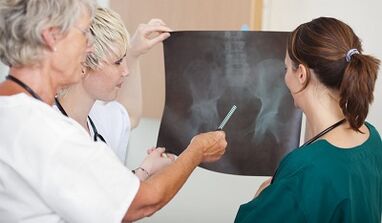
The most important diagnostic procedure that helps identify the expansion of the veins of the pelvis is ultrasonic topics.This procedure enables the vessels to be visualized by ultrasound.The process also helps to recognize a decrease in blood flow and the symptoms of venous valves.
In addition, the diagnosis of varicose veins of the pelvis includes excessive phlebography.This examination of the veins implies its content with contrast, which is easy to see on an X -Ray.As a result, it is possible to obtain a whole series of vascular images.On them you can see the extent of veins, thrombosis areas, collateral.The doctor can also evaluate the condition of the valves.However, this technology is not used during pregnancy and iodine dolance.
In the event of suspicion of expanding the veins of the pelvis in women, laparoscopy is carried out.For this purpose, a small puncture is carried out in the abdominal wall through which an endoscope is inserted.The pelvic cave is inspected with this tool.
However, ovaricography is the most informative process.This term is understood as an X beam examination of the ovary vein using a contrast medium.
In order to distinguish a pathology with other lesions of the pelvic organs, computer tomography is carried out.It is important to distinguish varicose veins in the pelvis of endometriosis and inflammation of the bladder.The differential diagnosis is also carried out with anomalies such as uterine prolapse, radiculite and inflammatory damage to the colon.
Treatment methods
The treatment of varicose veins of the pelvis should be complex.It includes general recommendations, medical and surgical therapy.
General recommendations
The basis of the treatment is compliance with a special regime and an appropriate nutrition.First, it is important to solve the problem with regard to working conditions.
The employee should be transferred to the activities that exclude weightlifting and considerable physical activity.
If necessary, you have to sit or stand for half an hour for half an hour, you have to take short breaks.At this point they have to run, crouch, raise their knees.The same principles must be observed after work.

The performance correction is equally important.
It is important to give up the consumption of fireproof fats, marinades, spices and spicy products.Alcoholic drinks and salts are also prohibited.A large number of fruit and vegetables, grain and vegetable oils should be inserted into the menu.
People with varicose veins of the pelvic organs should wear compression underwear.With their help, it is possible to restore the blood circulation in the vessels and to cope with the venous stagnation.In addition, gymnastics for varicose veins of the pelvis is very important.To do this, carry out exercises such as scissors, birch and bike.It is also useful to carry out the following movements:
- Go through the room through the heels, socks, with a high elevator of the knee;
- Place on your back, smooth your legs and then bend her in your knees and pull it to your chest.
- Lying on the stomach and alternately raising every leg;
- Lay on your back, just lift legs and then bend them in your knees and smooth them again.
To prevent the resurrection of the pathology, you have to swim, drive a coward, ride a bike
It is very useful to take a contrast shower.It is particularly important to pay attention to the lower abdomen, the perineum and the interior of the hips.
Pharmaceutical therapy
The treatment of varicose veins in the pool is carried out with medication.
Most of the time, doctors prescribe such categories of drugs:
- Phleboprotectors- You copy with inflammation, have an anti -detection, reduce vascular permeability and normalize the drainage of lymphs.
- Phlebotonics- They help to restore the sound and increase the elasticity of the walls of the blood vessels, to improve the rheological properties of blood.
- Anti -plans- are the prevention of blood clots.
- Non -steroidal anti -inflammatory medication- They help to cope with pain and inflammation.
- Antioxidants and membraneoprotectors- They help to avoid oxidation, to remove free radicals and to maintain the function of cell membranes normally.This includes vitamins C and E.
- Enteroses- lead to the binding of toxins in the intestine.
Surgical treatment
The surgical treatment of varicose veins of the pelvis is carried out according to strict information.This includes the following:
- Ineffectiveness of conservative treatment;
- The third degree of pathology;
- Difficulties in eliminating pain.
Different types of operations are carried out today.Everything depends on the localization of the pathology.
The main methods for surgical interventions include the following:
- Eggid cladding - takes place through the retroperitoneal region or by carrying out laparoscopy;
- Sclerobliteration of ovarian veins under angiographic control - in this case a sclerosing substance is introduced into the lumen.
- Eggplate artery resection - implies their partial distance;
- Laser coagulation or radio frequency method;
- Laparoscopic cutting out ovary veins;
- Phlebectomy - is carried out with the lesion of the vulva and the perineum zones;
- Crossectomy - implies the tightening of a large subcutaneous vein and its tributaries.
People's recipes
In addition to conventional methods, the treatment of varicose veins of the pelvis of folk remedies is used.
The most effective recipes include the following:
- The tincture of horse chestnut with oral use has an analgesic and venotonic effect.
- Hirudotherapy is successful with stagnation and swelling.This will help to remove the load and achieve a tonic effect.
- The tincture of the dandelion root has venotonic properties and helps to eliminate the symptoms of varicose veins.
Possible consequences
Over time, the identified varicose veins of the pelvis in women are perfectly corrected with medication.However, the diagnosis of pathology is very problematic.As a result, there is a risk of irreversible changes:

- The varicose veins of the pelvis continue to develop.As a result, reproductive organs, steps and legs are involved in the abnormal process.
- A sustainable dysfunction of the genital organs arises.This can cause infertility or miscarriage.
- Constant pain leads to psychoemotional disorders through the type of neurasthenia.
- Chronic complaints that increase during sex can force a person to fully give up sexual contacts.
- The rarest and most serious consequences are thrombosis and lung thromboembolism.These complications are observed in only 5% of cases, but are a threat to life.
prevention
In order to avoid varicose veins of a small pelvis in women, you must adhere to such recommendations:
- To normalize working conditions by excluding a long stay in a vertical or seated position.
- Exclude to increase heavy objects and give up complex physical exertion.
- To normalize a chair, remove constipation.The menu should have a large amount of vegetable oil and fiber.It is important to give up acute food, cucumbers, alcohol.
- Take a contrast shower every day and pay special attention to the perineum.
- Do exercises with raised legs.
- Use compression lines.
- Deal with breath gymnastics.
- Take the venotonics for preventive purposes.Such courses take place 3-4 times a year.
The cramp expansion of the pelvis is a fairly heavy anomaly that can lead to negative health consequences.To avoid this, it is very important to contact the doctor immediately and to clearly follow all of his recommendations.